

ResolvePAIN Summer School
Translating Pain – From Mechanisms to Meaning
The program will feature leading researchers in pain science and explore how discoveries in basic research can inform the understanding and treatment of chronic pain. Through lectures, workshops, and a panel discussion, participants will gain insights into current concepts, experimental approaches, and clinical perspectives in pain research. The Summer School will also offer opportunities for discussion and networking with experts and peers.
ResolvePAIN (KFO5001) brings together clinical and life scientists investigating the mechanisms underlying the chronification of neuropathic pain and the biological processes that contribute to its resolution. Research within the consortium focuses on several chronic pain conditions, including bortezomib-induced polyneuropathy (BIPN), complex regional pain syndrome (CRPS), and chronic postsurgical pain (CPSP), as well as less common disorders such as fibromyalgia (FMS) and autoimmune neuropathy associated with Caspr2 autoantibodies.
Program
To enrich our Summer School, we have invited excellent speakers in the pain research field. They are representing experts in their fields from Germany and abroad, in the research of pain circuits, pathways and interplays (Dr. Sebastian Wieland, Prof. Dr. Martin Schmelz, and Prof. Dr. Hanns U. Zeilhofer) as well as CRPS (Prof. Dr. Janne Gierthmühlen) and psychological backgrounds in pain (Prof. Dr. Susanne Becker). Get excited for our panel discussion about paper mills and scientific fraud.
Tuesday, 14 July 2026
| 12:00–12:45 | Welcome reception & registration |
|---|---|
| 12:45–13:00 | Welcome words |
| 13:00–13:45 | Plenary lecture – Dr. Sebastian Wieland Early-life stress induces a latent thalamic sensitization underlying female vulnerability to pain and anxiety |
| 14:00–15:30 | Seminars
|
| 15:30–16:00 | Coffee break |
| 16:00–17:00 | Panel discussion Paper Mills and Fraud in Science – Causes, Consequences and Countermeasures |
| 17:00–18:30 | Poster session |
| 18:30–19:15 | Plenary lecture – Prof. Dr. Martin Schmelz Silent nociceptors in translation: conserved transcriptomics but different function? |
| 19:15 | Networking & Get together with catering |
| 21:00 | Pub crawl |
Wednesday, 15 July 2026
| 9:50–10:00 | Welcome & Organizational remarks |
|---|---|
| 10:00–10:45 | Plenary lecture – Prof. Dr. Hanns U. Zeilhofer Neurons and circuits of descending pain modulation |
| 10:45–11:00 | Coffee break |
| 11:00–12:30 | Seminars
|
| 12:30–13:00 | Lunch break |
| 13:00–13:45 | Plenary lecture – Prof. Dr. Susanne Becker Too much pain and too little reward? How intersections of pain and reward processing contribute to chronic pain |
| 13:45–14:30 | Data blitz session – Early career scientists |
| 14:30–16:30 | Excursion to the Residenz |
| 18:00 | Dinner |
Thursday, 16 July 2026
| 9:50–10:00 | Welcome organizational remarks |
|---|---|
| 10:00–10:45 | Plenary lecture – Prof. Dr. Janne Gierthmühlen t.b.a. |
| 10:45–11:00 | Coffee break |
| 11:00–12:30 | Seminars
|
| 12:30–13:00 | Lunch break |
| 13:00–13:45 | Data blitz session – Early career scientists |
| 13:45–14:30 | Plenary lecture – Dr. Lénaïc Monconduit t.b.a. |
| 14:30–15:00 | Closing remarks With poster and talk awards |
Poster and Presentations
You are welcome to present your own data in the form of a poster or a talk. If you would like to give a talk, please send us a short abstract along your registration. Regardless of your stage of research, we would like to invite everyone to present their data. An oral presentation is a great opportunity for you to practice in front of a smaller group without too much pressure.
Please prepare your poster in a vertical A0 format, and your talk to be approximately 5-10 minutes.
You will get a participation certificate at the end, which you can use for your academic record.
Social events
To increase the exchange and support networking among participants, we have arranged socializing events. Please also register to the social events in order for us to plan appropriately (you can sign up for all of them).
Tuesday’s Events
- Networking & Get together with catering
- Pub crawl
Wednesday’s Events
- Guided wine cellar tour with wine tasting
- Dinner at Jahnterasse
FAQ
Who can participate?
You are welcome to participate independently of your career stage. Regardless of whether you are at an early stage of your career as a BSc, MSc, PhD, or MD student, or later stage as Post-Doc or PI you are warmly invited to our Summer School.
Do I have to present my data?
We strongly encourage you to present your data, but you do not have to in order to participate in the Summer School.
Presentation-format and abstract submission
Poster: A0 vertical, give us your title
Talk: about 5-10 min, please provide your title and a small abstract.
Will I get a certificate?
We will issue certificates of attendance and active participation that you can use towards your academic record.
Do I have to register and is there a registration fee?
Registration is necessary, only this way we are able to plan the event. There is no registration fee to be paid.
Will there be food?
We will provide food throughout the event. In case of food-allergies please contact us (JuniorCouncil.KFO5001@ukw.de).
My question is not listed
Sorry we missed something. Please contact us by e-mail at JuniorCouncil.KFO5001@ukw.de and we will get back to you as soon as possible.
About us – The Junior Council

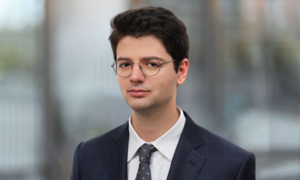


The Junior Council is a group of early-career scientists within the ResolvePAIN consortium (KFO5001). It organizes networking activities for young researchers and fosters dialogue with senior scientists. By hosting the Summer School, the Council connects participants with experts beyond the consortium, promoting exchange, collaboration, and the sharing of scientific knowledge.
Venue
Deutsches Zentrum für Herzinsuffizienz Würzburg
Am Schwarzenberg 15, Haus A15 · D-97078 Würzburg · Germany
Find more information about how to get there and about parking options