
Translational Cellular Therapies

The Uslu Laboratory (AG Uslu)
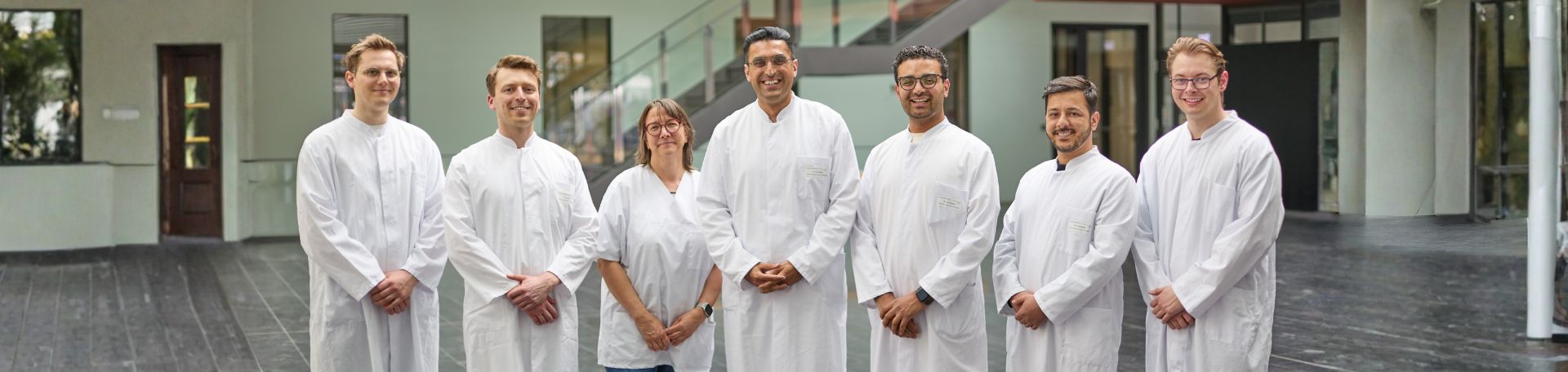
Prof. Dr. Ugur Uslu leads the scientifically ambitious and internationally connected research group at the Department of Dermatology, Venereology and Allergology of the University Hospital Würzburg. Together, we work to turn preclinical discoveries into robust therapeutic strategies - with the aim of creating new perspectives for patients with difficult-to-treat skin cancer.
Our work lies at the interface of patient care, immunology, cell engineering and preclinical validation. We do not only ask whether a CAR/TCR T cell can recognize a tumor cell. We want to understand how it remains strong within the tumor, how it overcomes resistance mechanisms and how it can be safely translated into clinically relevant concepts.
What is CAR/TCR T Cell Therapy?
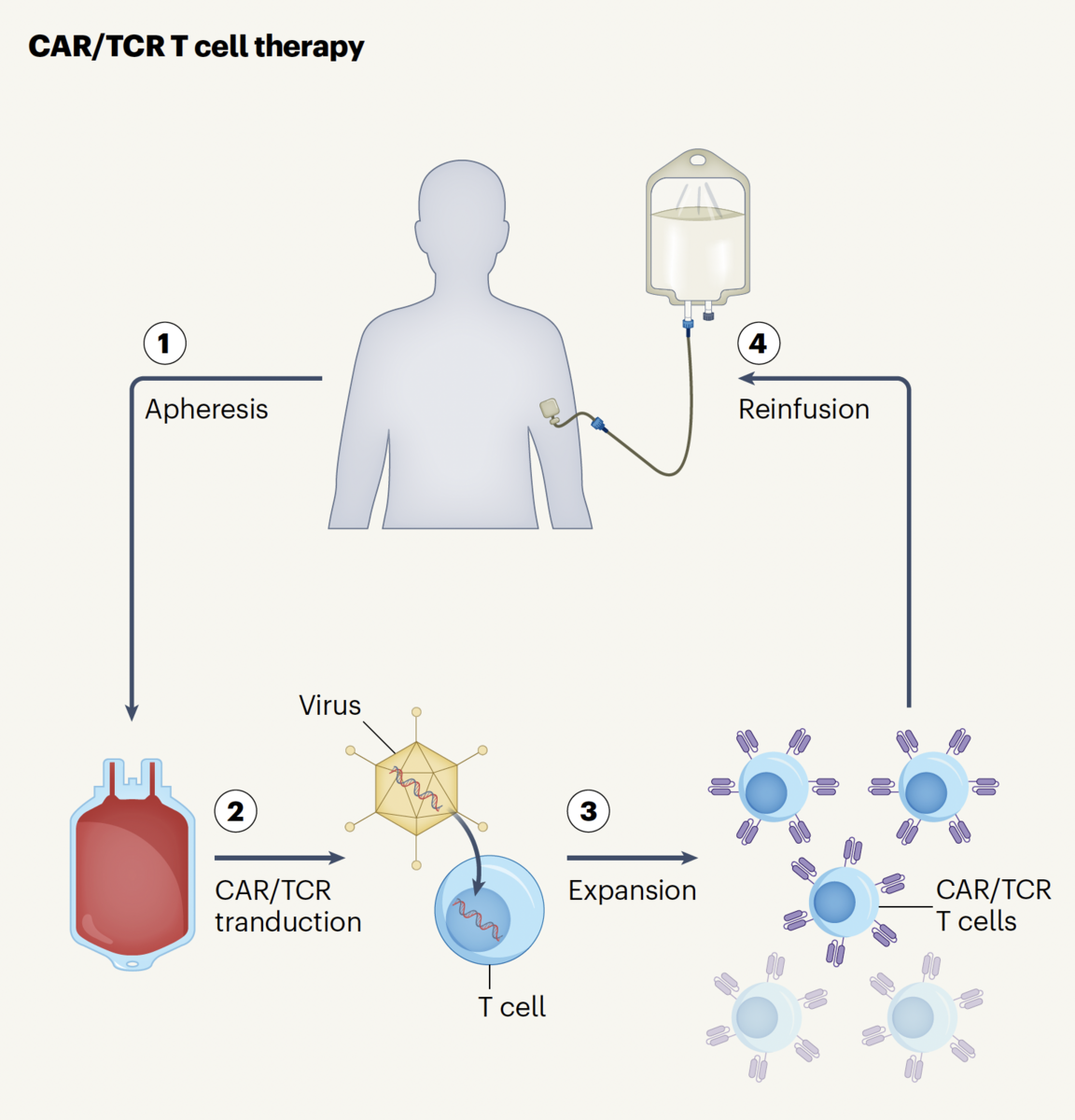
CAR and TCR T cell therapies harness the power of the immune system. T cells are obtained from blood, equipped in the laboratory with a tumor antigen-specific receptor, expanded, and then returned to the patient. This enables them to specifically recognize and attack cancer cells.
Advancing CAR T Therapy for Solid Tumors
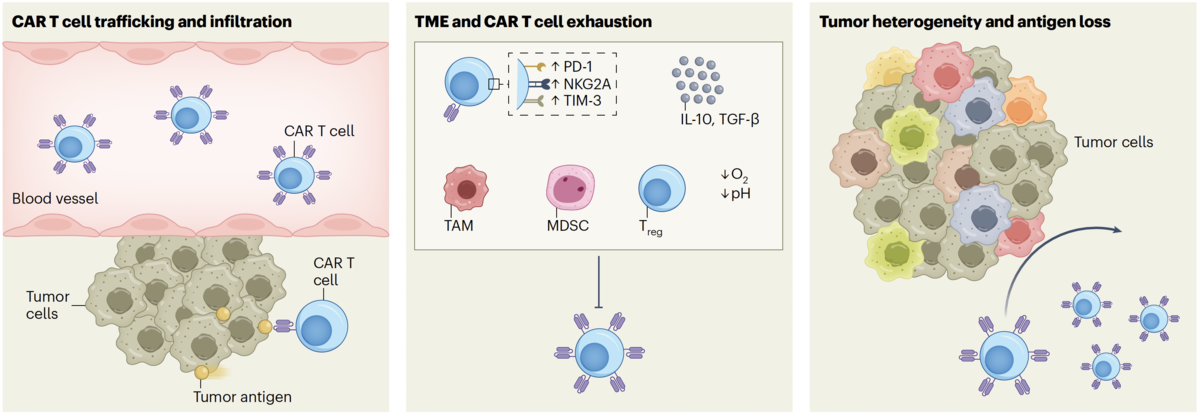
Especially CAR T cells have fundamentally changed the treatment of leukemias and lymphomas and are an approved standard therapy in these diseases. In addition, initial successes have been achieved in patients with severe autoimmune diseases. In solid tumors, however, the major breakthrough has not yet been achieved: the cells must reach dense tumor tissue, enter an immunosuppressive microenvironment and remain functional there despite stress, exhaustion and tumor heterogeneity. This is precisely where the Uslu Lab aims to intervene.
Our Solutions and Research Focus Areas
We develop CAR T cell platforms and combination therapies that are specifically designed to address the barriers of solid tumors. Our goal is to make cell therapies more potent, more durable and more controllable.
- Optimized CAR T cell products: We compare different CAR constructs and target antigens in relevant skin cancer models, both in vitro and in vivo.
- Next-generation CAR design: We develop constructs with optimized co-stimulatory domains, improved trafficking properties and new target structures.
- Cell fitness and cytokine signals: We investigate which signals help CAR T cells to proliferate better, persist longer and remain functional under tumor stress.
- Targeted modulation of the tumor microenvironment: We investigate strategies to improve T cell infiltration and extravasation, for example by blocking cytokine-mediated barriers.
- Rational combination therapies: We combine CAR T cells with approaches such as oncolytic viruses or other immunomodulatory agents to make the tumor more accessible to cell therapies.
- Innovative manufacturing and translation: We evaluate new manufacturing concepts, including LNP-based in vivo CAR T cell generation, and assess efficacy, safety, persistence and off-target effects in preclinical models.
Our Translational Commitment
As a clinically embedded research group, we think about cell therapy from the patient’s perspective. Questions arising from the care of skin cancer patients feed into our laboratory projects; conversely, strong preclinical data should create the basis for future clinical trials.
“Our highest goal is to unlock the full potential of cellular therapies for patients with solid tumors – and to translate scientific innovations into real clinical breakthroughs.”
Group leader
Ugur Uslu is Professor of Dermatological Oncology and attending physician at the Department of Dermatology of the University Hospital Würzburg. He studied medicine at the University of Tübingen, completed his doctoral thesis on melanoma in the head and neck region and completed his clinical dermatology training and habilitation at Friedrich-Alexander University Erlangen-Nürnberg.
From 2020 to 2025, he conducted research at the University of Pennsylvania in Philadelphia/USA in the laboratory of Carl H. June, a pioneer of CAR T cell therapy. There, he worked on translational strategies to enhance CAR T cell efficacy against solid tumors. In Würzburg, he brings these experiences together with dermatological oncology, clinical care and cell therapy research.
Selected publications
Baker DJ, Frommer LM, Uslu U, Patel KK, Zhu D, Engel NW, George JM, Zhao W, Kim SI, Sun L, Roselle C, Rommel PC, Young RM, Epstein JA, Hayat S, Arany Z, June CH. AI-driven discovery of GPNMB CAR T cells as a multi-cancer therapy. Cell 2026; 189(13):3871-3882.e12.
Castelli S, Wilson W, Uslu U, Finck A, Assenmacher CA, Atoche SJ, Siurala M, Young RM, June CH. IL-9 signaling redirects CAR T cell fate toward CD8+ memory and CD4+ cycling states, enhancing anti-tumor efficacy. Immunity 2026; 59(1):195-212.e11.
Uslu U, June CH. Beyond the blood: Expanding CAR T cell therapy to solid tumors. Nature Biotechnology 2025; 43(4):506-515.
Uslu U, Castelli S, June CH. CAR T cell combination therapies to treat cancer. Cancer Cell 2024; 42(8):1319-1325.
Amit U*, Uslu U*, Verginadis II*, Kim MM, Motlagh SAO, Diffenderfer ES, Assenmacher CA, Bicher S, Atoche SJ, Ben-Josef E, Young RM, June CH, Koumenis C. Proton radiation boosts efficacy of mesothelin-targeting chimeric antigen receptor T cell therapy in pancreatic cancer. PNAS 2024; 121(31):e2403002121. *shared first authors
Uslu U, Sun L, Castelli S, Finck AV, Assenmacher CA, Young RM, Chen ZJ, June CH. The STING agonist IMSA101 enhances chimeric antigen receptor T cell function by inducing IL-18 secretion. Nature Communications 2024; 15(1):3933.
Uslu U, Da T, Assenmacher CA, Scholler J, Young RM, Tchou J, June CH. Chimeric antigen receptor T cells as adjuvant therapy for unresectable adenocarcinoma. Science Advances 2023; 9: eade2526.
Uslu U, June CH. T-cell therapies targeting multiple cancer antigens: The power of many. Cancer Immunology Research 2023; 11(7):865.
Uslu U, June CH. CAR T-cell therapy meets clonal hematopoiesis. Blood Cancer Discovery 2022; 3(5):382-384.
Young RM, Engel NW, Uslu U, Wellhausen N, June CH. Next-generation CAR T-cell therapies. Cancer Discovery 2022; 12(7):1625-1633.
Press releases and media appearances
OncoDaily TV: ONCOFFEE: Ugur Uslu - From Carl June’s Lab to Launching His Own
Experten im Gespräch: Prof. Dr. Ugur Uslu, Würzburg
University of Wuerzburg appoints Ugur Uslu to professorship in dermatological oncology (in German)
Researchers use CAR-T gel to kill leftover cancer cells after surgery (helio.com)
Contact
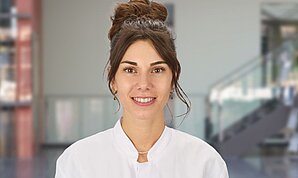
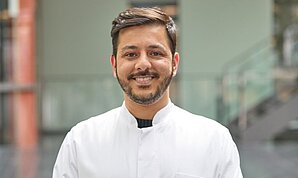
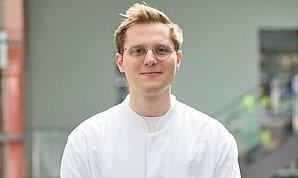
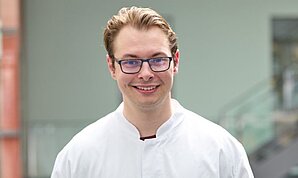
Are you interested in cellular immunotherapy, skin cancer research or translational oncology? We welcome scientific exchange, collaborations and unsolicited applications from motivated students, doctoral candidates, Clinician Scientists, postdocs and technical assistants.
Contact: Prof. Dr. Ugur Uslu, uslu_u@ukw.de
Contact
Appointment Policlinic
+49 931 201-26714
Monday to Thursday
12:00 PM to 16:00 PM
Friday
12:00 PM to 15:00 PM
Appointment In-patient care
Monday to Friday
08:00 AM to 12:00 PM
Margit Körner
+49 931 201-26354
Telephone
Gate
+49 931 201-26710
Directorate
Prof. Dr. med. Matthias Goebeler
Secretary's office
Gudrun Braun
+49 931 201-26351
Student matters
Ute Düchs
+49 931 201-26353
Address
Klinik und Poliklinik für Dermatologie, Venerologie und Allergologie | Josef-Schneider-Straße 2 | Haus D8 | 97080 Würzburg | Deutschland