
Research
Innovating cancer-directed CAR-T cell therapies with genome engineering
One major challenge in CAR-T cell therapy is the reduced efficacy in treating solid tumors. To address this, we are employing advanced gene-editing techniques to precisely alter the DNA of therapeutic CAR-T cells at the nucleotide level. This allows for the creation of more effective treatments that can better penetrate and combat solid tumors.
Another issue, particularly in diseases like multiple myeloma, is the limited durability of tumor responses. To tackle this, we are focused on modifying CAR-T cells to extend the duration of remission achieved through therapy. Our approach includes enhancing the potency, persistence, and resistance to exhaustion of immune cell products, thereby improving overall treatment outcomes.
Additionally, the production of CAR-T cells is currently slow and labor-intensive. To resolve this, our team is developing faster and more cost-effective production methods, such as utilizing allogeneic CAR-T cells—modified T cells from healthy donors. Through CRISPR 2.0 editing, we can modify specific molecules on these CAR-T cells to prevent rejection by the immune system. This allows for the large-scale production of CAR-T cells that can be applied to a wider range of patients and treatment scenarios.
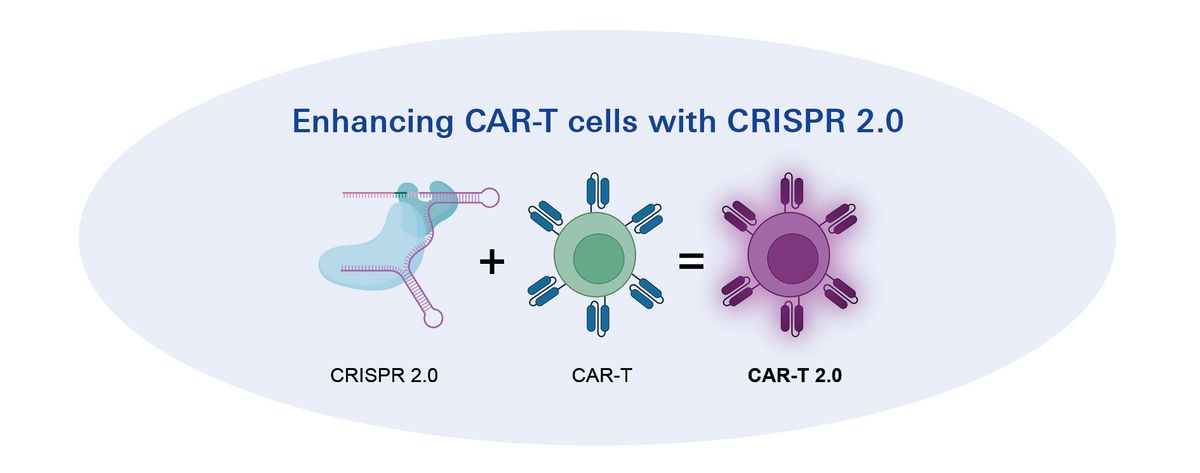
Developing new genome engineering technologies for immune cells
To further enhance the effectiveness of genome engineering technologies in immune cell therapies for cancer, we are actively developing new tools aimed at creating genome editors that are more efficient, precise, and capable. To achieve this, we are employing a diverse range of protein development approaches, including machine learning, directed evolution, rational engineering, and high-throughput screening, to design gene editors with improved efficiency and safety profiles, paving the way for next-generation CAR-T cell therapies.
A significant focus of these efforts is on optimizing genome engineering technologies specifically for editing immune cells, such as primary human T cells. To ensure the robustness and safety of our innovations, we conduct thorough validation of newly developed gene editors in primary cell types. Our priority is to enhance the precision of genome editing technologies by minimizing adverse effects at both off-target and on-target sites.
The ultimate goal of our engineering efforts is to create a comprehensive, effective, and safe toolkit of gene editors that enable precise modifications of immune cells. By advancing and expanding genome engineering capabilities for immune cells, we aim to significantly improve CAR-T cell therapies and facilitate the development of more effective cellular immunotherapies for cancer.
Innovating molecular assays for safety-validating genome engineering technologies
To fully harness the potential of next-generation genome engineering technologies for advancing CAR-T cell and immune cell engineering, as well as creating more potent anti-tumor therapies, it is crucial to ensure the safety of these novel approaches. Without this essential step, it will be challenging to bring new genome editing technologies into clinical use.
Genome editors do not always induce edits only at the intended target locus. They can also affect unintended regions of the genome, known as off-target sites, or cause undesirable outcomes at the target site, such as large chromosomal truncations, translocations, deletions, or chromothripsis. To comprehensively assess the risks of these adverse side effects, our lab is developing and employing cutting-edge molecular methods to evaluate the accuracy of genome editing. This includes tools for detecting off-target effects and unwanted on-target modifications caused by genome editors.
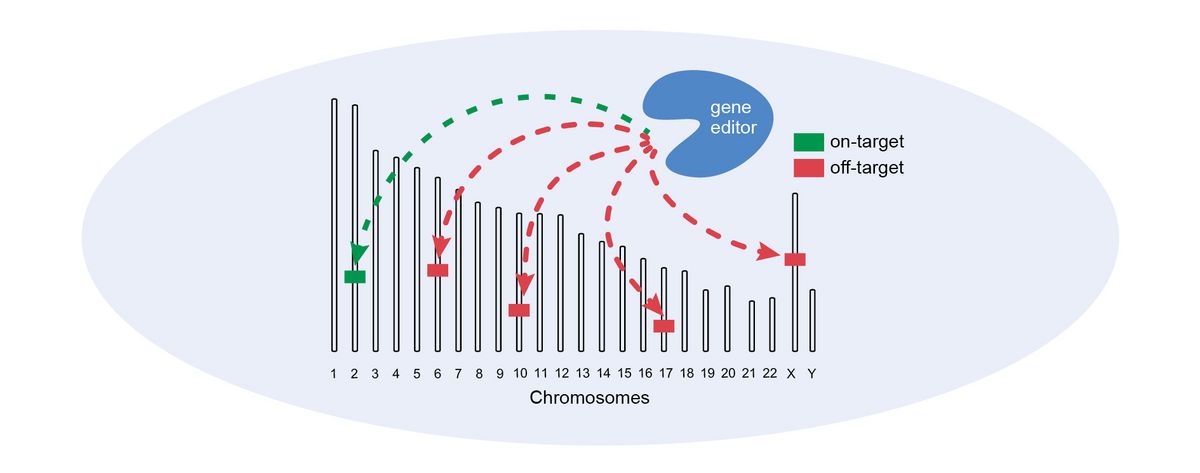
Additionally, we are developing methods to monitor the broader consequences of genome editing in immune cells. We believe that the successful clinical translation of new molecular technologies must go hand in hand with a rigorous analysis of potential side effects. This meticulous approach is a prerequisite for ensuring that next-generation genome engineering technologies can be safely and effectively applied to make a meaningful impact for cancer patients.
Publications
Petri, K.†, D’Ippolito, E., Künkele, A., Köhl, U., Busch, D. H., Einsele, H. & Hudecek, M. † (2025). Next-generation T cell immunotherapies engineered with CRISPR base and prime editing: challenges and opportunities. Nat Rev Clin Oncol, doi:10.1038/s41571-025-01072-4.
†Corresponding author
Petri, K.*, Zhang, W.*, Ma, J.*, Schmidts, A.*, Lee, H., Horng, J. E., Kim, D. Y., Kurt, I. C., Clement, K., Hsu, J. Y., Pinello, L., Maus, M. v, Joung, J. K., & Yeh, J.-R. J. (2022). CRISPR prime editing with ribonucleoprotein complexes in zebrafish and primary human cells.
Nature Biotechnology, 40(2), 189–193. https://doi.org/10.1038/s41587-021-00901-y
Petri, K., & Grünewald, J. (2023). An update on prime editing: recent advances and applications.
Cell and Gene Therapy Insights, 9(9), 1359–1365. https://doi.org/10.18609/cgti.2023.174
Zhang, W., Petri, K., Ma, J., Lee, H., Tsai, C.-L., Joung, J. K., & Yeh, J.-R. J. (2023). Enhancing CRISPR prime editing by reducing misfolded pegRNA interactions.
eLife, 12. https://doi.org/10.7554/ELIFE.90948
Grünewald, J., Miller, B. R., Szalay, R. N., Cabeceiras, P. K., Woodilla, C. J., Holtz, E. J. B., Petri, K., & Joung, J. K. (2022). Engineered CRISPR prime editors with compact, untethered reverse transcriptases.
Nature Biotechnology 2022, 1–7. https://doi.org/10.1038/s41587-022-01473-1
Annas, G. J., Beisel, C. L., Clement, K., Crisanti, A., Francis, S., Galardini, M., Galizi, R., Grünewald, J., Immobile, G., Khalil, A. S., Müller, R., Pattanayak, V., Petri, K., Paul, L., Pinello, L., Simoni, A., Taxiarchi, C., & Joung, J. K. (2021). A Code of Ethics for Gene Drive Research.
The CRISPR Journal, 4(1), 19–24. https://doi.org/10.1089/crispr.2020.0096
Hsu, J. Y., Grünewald, J., Szalay, R., Shih, J., Anzalone, A. v., Lam, K. C., Shen, M. W., Petri, K., Liu, D. R., Keith Joung, J., & Pinello, L. (2021). PrimeDesign software for rapid and simplified design of prime editing guide RNAs.
Nature Communications 2021 12:1, 12(1), 1–6. https://doi.org/10.1038/s41467-021-21337-7
Petri, K., & Pattanayak, V. (2018). SHERLOCK and DETECTR Open a New Frontier in Molecular Diagnostics.
The CRISPR Journal, 1(3), 209–211. https://doi.org/10.1089/crispr.2018.29018.kpe
Zeng, J., Nguyen, M. A., Liu, P., da Silva, L. F., Levesque, S., Lin, L. Y., Justus, D. G., Petri, K., Clement, K., Porter, S. N., Verma, A., Neri, N. R., Rosanwo, T., Ciuculescu, M.-F., Abriss, D., Mintzer, E., Maitland, S. A., Demirci, S., Cha, H. J., … Bauer, D. E. (2024). Gene editing without ex vivo culture evades genotoxicity in human hematopoietic stem cells.
Cell Stem Cell. https://doi.org/10.1016/j.stem.2024.11.001
Petri, K., Kim, D. Y., Sasaki, K. E., Canver, M. C., Wang, X., Shah, H., Lee, H., Horng, J. E., Clement, K., Iyer, S., Garcia, S. P., Guo, J. A., Newby, G. A., Pinello, L., Liu, D. R., Aryee, M. J., Musunuru, K., Joung, J. K., & Pattanayak, V. (2021). Global-scale CRISPR gene editor specificity profiling by ONE-seq identifies population-specific, variant off-target effects.
bioRxiv, 2021.04.05.438458. https://doi.org/10.1101/2021.04.05.438458
Garrood, W. T., Kranjc, N., Petri, K., Kim, D. Y., Guo, J. A., Hammond, A. M., Morianou, I., Pattanayak, V., Joung, J. K., Crisanti, A., & Simoni, A. (2021). Analysis of off-target effects in CRISPR-based gene drives in the human malaria mosquito.
Proceedings of the National Academy of Sciences of the United States of America, 118(22). https://doi.org/10.1073/PNAS.200483811
Konstantinidis, E., Molisak, A., Perrin, F., Streubel-Gallasch, L., Fayad, S., Kim, D. Y., Petri, K., Aryee, M. J., Aguilar, X., György, B., Giedraitis, V., Joung, J. K., Pattanayak, V., Essand, M., Erlandsson, A., Berezovska, O., & Ingelsson, M. (2022). CRISPR-Cas9 treatment partially restores amyloid-β 42/40 in human fibroblasts with the Alzheimer's disease PSEN 1 M146L mutation.
Molecular Therapy. Nucleic Acids, 28, 450–461. https://doi.org/10.1016/J.OMTN.2022.03.022
Knipping, F., Osborn, M. J., Petri, K., Tolar, J., Glimm, H., von Kalle, C., Schmidt, M., & Gabriel, R. (2017). Genome-wide Specificity of Highly Efficient TALENs and CRISPR/Cas9 for T Cell Receptor Modification.
Molecular Therapy - Methods and Clinical Development, 4. https://doi.org/10.1016/j.omtm.2017.01.005
Petri, K.*, Gabriel, R.*, Agundez, L.*, Fronza, R., Afzal, S., Kaeppel, C., Linden, R. M., Henckaerts, E., & Schmidt, M. (2015). Presence of a trs-like motif promotes Rep-mediated wildtype adeno-associated virus type 2 integration.
Journal of Virology, 89(14). https://doi.org/10.1128/JVI.00426-15
Petri, K., Fronza, R., Gabriel, R., Käppel, C., Nowrouzi, A., Linden, R. M., Henckaerts, E., & Schmidt, M. (2014). Comparative next-generation sequencing of adeno-associated virus inverted terminal repeats.
BioTechniques, 56(5), 269–273. https://doi.org/10.2144/000114170