AI-Assisted Detection and Reporting of Colonic Angiodysplasia
To address this, we developed an AI system that tackles the problem from two angles. During the procedure itself, a computer vision model analyses the colonoscopy feed in real time, flagging angiodysplasia as it appears on screen. After the examination, a locally deployed large language model cross-checks the written report to verify whether the finding has been properly documented. Together, the two components form a closed loop: one ensuring findings are seen, the other ensuring they are recorded.
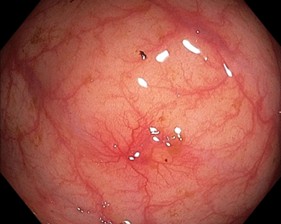
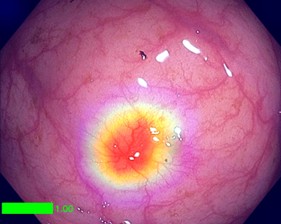
By combining real-time detection with automated report verification, the system supports more complete and standardised documentation without disrupting clinical workflow. Local deployment of the language model also ensures that patient data never leaves the clinical environment, preserving privacy by design.
This research project is supported by the Eva Mayr-Stihl Foundation.